
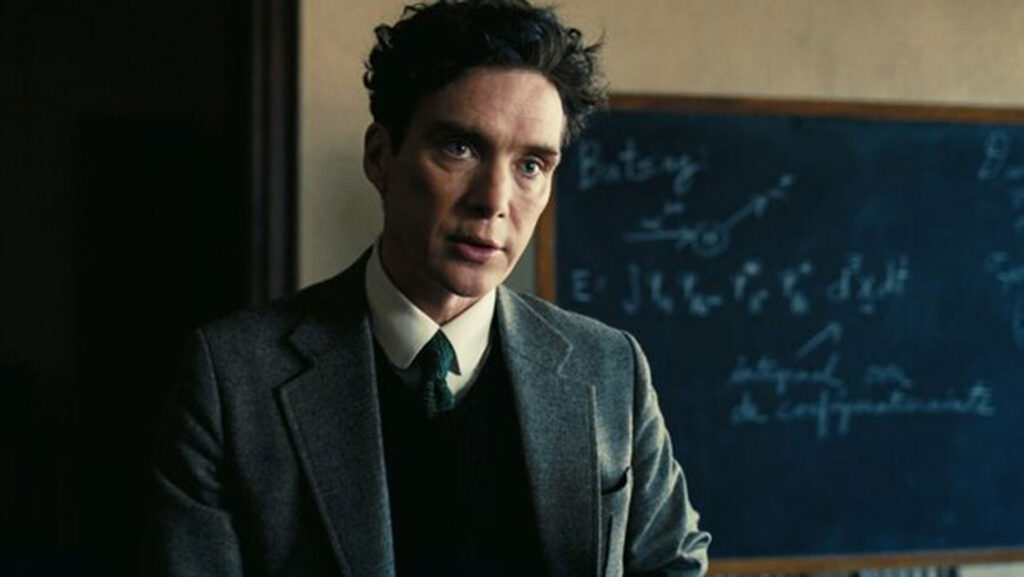
The Story of Oppenheimer
Christopher Nolan’s Oppenheimer is a gripping biographical drama that explores the life of J. Robert Oppenheimer, the scientist who led the Manhattan Project and ultimately created the nuclear bomb. Set against the backdrop of World War II, the film captures both the excitement of scientific discovery and the devastating consequences that followed. At the heart of the story is Oppenheimer’s transformation—from an ambitious physicist fascinated by the mysteries of quantum mechanics to a man forever haunted by the weapon he helped bring into existence. The movie begins with Oppenheimer as an eager, almost idealistic young scientist whose passion for exploring new ideas fuels his rise in the academic world. When he is approached to lead the Manhattan Project, he views it as both an opportunity to contribute to the war effort and a challenge that could define his career. Yet, as history unfolds, the very creation that once filled him with pride becomes the source of his deepest regrets. By showing this contrast, the film highlights the fine line between scientific progress and moral responsibility, reminding viewers that even the most brilliant innovations can carry consequences beyond imagination.
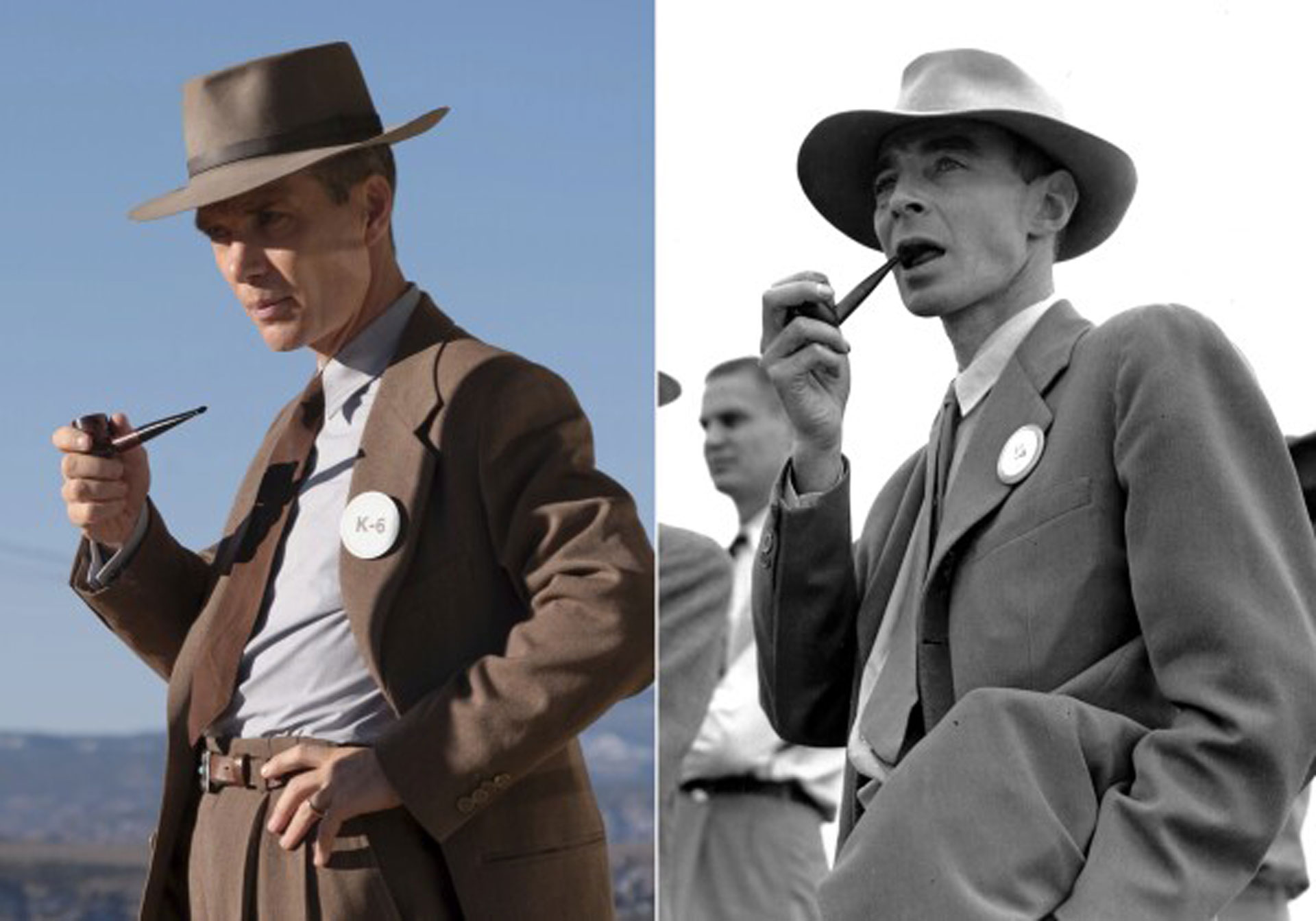
Cillian Murphy’s Haunting Performance
One of the film’s strongest elements is Cillian Murphy’s portrayal of Oppenheimer. Murphy disappears into the role, delivering a performance that is both subtle and emotionally intense. In the early stages of the story, he plays Oppenheimer as a man filled with energy and curiosity, eager to prove himself in the world of physics. His enthusiasm is contagious, and viewers can easily understand why he was chosen to lead such an ambitious and secretive project. As the narrative progresses, however, Murphy shifts his performance to reflect Oppenheimer’s growing unease. The excitement that once defined the character slowly gives way to fear, guilt, and a heavy sense of responsibility. When the bomb is finally dropped on Japan, Murphy captures the devastating weight of realization—the recognition that his work has not only ended a war but also ushered in the possibility of global destruction. The trauma etched across his face during these moments communicates more than words ever could. His performance makes Oppenheimer’s inner conflict palpable, allowing audiences to feel the emotional burden of a man who changed the world but could not control how his creation was used. This role stands as one of Murphy’s most powerful performances, cementing him as an actor capable of embodying both brilliance and vulnerability in equal measure.

The Weight of Consequences
The final act of Oppenheimer shifts focus from the creation of the bomb to the aftermath of its use and the political fallout that followed. Rather than being celebrated unconditionally as a hero, Oppenheimer becomes a controversial figure. Haunted by the destruction of Hiroshima and Nagasaki, he begins to question whether his contribution has doomed humanity to an age of fear and potential annihilation. Instead of embracing him, the government turns against him, scrutinizing his character, motives, and even his heritage. He is accused of disloyalty, attacked for his political associations, and even targeted with anti-Semitic remarks, with critics attempting to undermine his credibility by labeling him a Jewish outsider. These scenes reveal how quickly public opinion can shift and how those in power often redirect blame to shield themselves from criticism. What makes this part of the story especially compelling is how it reframes Oppenheimer not only as a scientist but also as a tragic figure—someone who gave the world a powerful tool and then lived to see it weaponized against him. Nolan presents him as both creator and victim, celebrated and condemned, admired and scapegoated. The film closes not with triumph but with a haunting reminder that Oppenheimer’s greatest achievement was also his greatest burden. His story raises timeless questions about the role of science in society, the ethics of innovation, and the responsibility of those who push the boundaries of human knowledge.
A WordPress Commenter
Hi, this is a comment.
To get started with moderating, editing, and deleting comments, please visit the Comments screen in the dashboard.
Commenter avatars come from Gravatar.